
Content may contain affiliate links. When you shop the links, we receive a small commission at no cost to you. Thanks for supporting my small business.
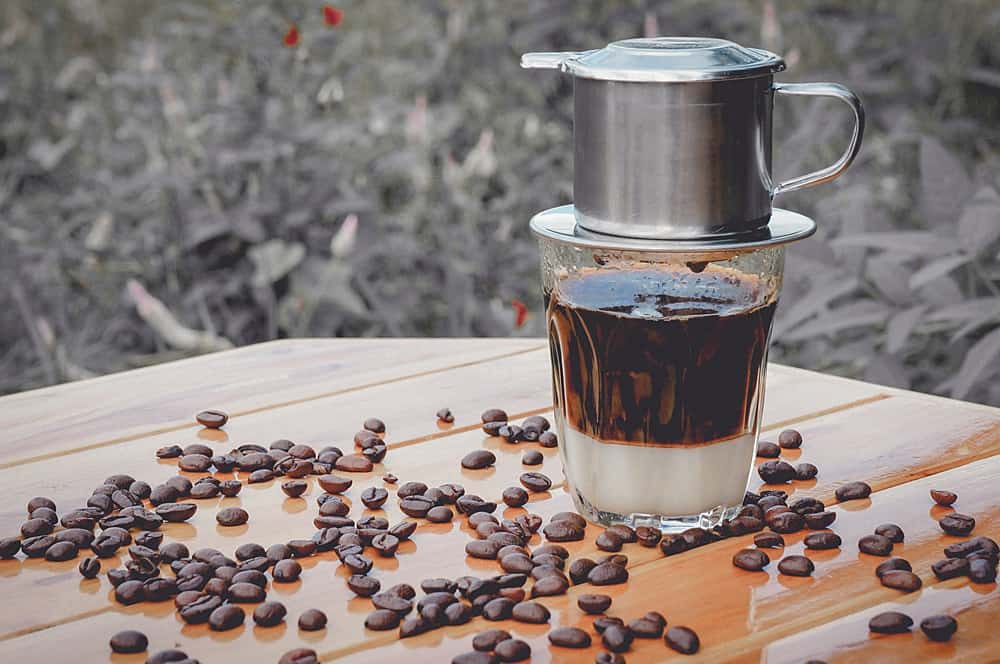
Vietnamese iced coffee is a delicious start to the morning and is a very popular drink! Known as Ca Phe Sua Da, Vietnamese iced coffee is produced with a tiny metal Vietnamese drip filter and medium to coarse ground dark roast Vietnamese-grown coffee. Ca Phe Sua Da is a Vietnamese beverage that has garnered enormous appeal and a large following in recent years.
About Vietnamese Iced Coffee
Vietnamese coffee is defined by two essential elements: the phin filter and condensed milk. Unlike the coffee we’re used to in the United States, which is prepared in a machine and combined with creamer and sugar, Vietnamese coffee is made slowly with condensed milk which provisions the sweetness and thickness it’s known for. The outcome is a creamy coffee with a richer taste and a milky undertone that is nearly caramelized.
Vietnamese coffee is not the same as coffee with condensed milk, as many people believe. The misperception originates from the fact that condensed milk is used to sweeten a lot of Vietnamese coffee beverages, although it’s merely a typical component there. Vietnamese folks like their coffee black as well.
Authentic Vietnamese iced coffee will always have the three elements that define the country: phin-filtered coffee, robusta beans (I’ll recommend the brand to use in a few), and condensed milk to sweeten it. While it’s okay for this recipe to use different brewing techniques, different brands of coffee, or even different creamers or sweeteners, it just makes “Vietnamese-inspired” iced coffee, not authentic Vietnamese iced coffee.
Use of Condensed Milk in Vietnamese Iced Coffee
The usage of condensed milk in Vietnam is due to the fact that when this drink is served by street sellers, the milk does not spoil when exposed to heat and humidity, particularly during hot summer days.
Vietnamese iced coffee is sold under the following names:
- Ca Phe Da
- Ca Phe Sua Da
The key is rich, sweet, and wonderful condensed milk, as it turns out. This thick, syrupy beverage was created to allow milk to be stored for long periods of time without refrigeration in the hot environment, and it has gained considerable appeal and use throughout the region.
Flavors of Vietnamese Iced Coffee
Here are some popular flavors and variations of Vietnamese iced coffee that you will find.
Coffee with Milk (Ca Phe Nau or Ca Phe Sua)
Because fresh milk was difficult to get by in Europe and Asia, most people drank the dark, powerful coffee with sweetened condensed milk. Fresh milk hasn’t been a popular element in conventional coffee cafes until recently. You can inquire, but don’t expect a response.
Yogurt Coffee (Sua Chua Ca Phe)
Yogurt, like coffee, was brought to Vietnam by the French and has since become part of the Vietnamese culinary culture. It comes with a variety of toppings, ranging from fresh mango to fermented rice..
Egg Coffee (Ca Phe Trung)
In this rich dish, an egg yolk beaten with condensed milk into an airy froth meets black coffee, similar to what you could consider as tiramisu. Egg coffee, a Hanoi creation, initially appeared in the 1940s, when milk was limited and egg yolks served as a good substitute.
Coconut Coffee (Ca Phe Cot Dua)
It’s unclear whether this is a traditional recipe or one created by the Cong Caphe coffee shop business. What is known is that it has been a popular choice among stylish Vietnamese youth in recent years.
Coffee Smoothie (Sinh to Ca Phe)
Coffee has even made its way into smoothies in recent years. Popular juice businesses enliven creamy fruit combinations with a hint of Vietnamese coffee, occasionally adding yoghurt or cashews. Try sinh to ca phe chuoi bo in Hanoi (coffee blended with banana and avocado).


Coffee Bean Brands Used in Vietnamese Iced Coffee
There are several popular Vietnamese coffee brands available in the United States that can be used to make Ca Phe Sua Da:
- Trung Nguyen (Pre-Ground)
- Chestbrew – Moon Bear (Whole Bean)
- Saigon Phin Daklak
- Dalat Peaberry Robusta
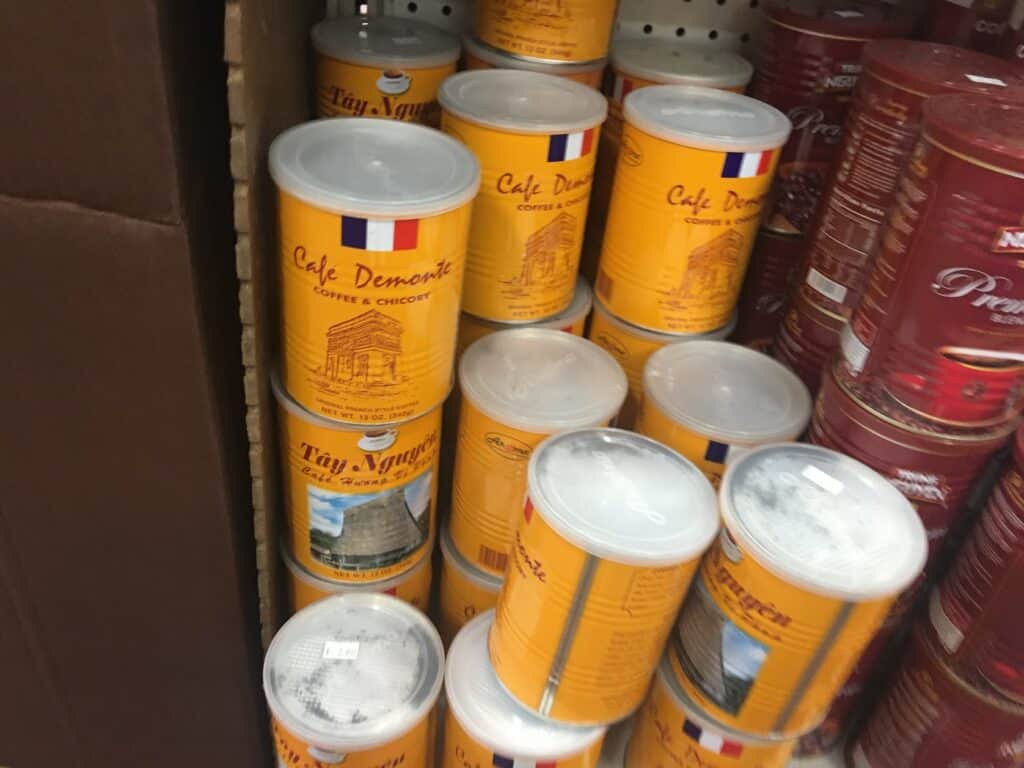
- Cafe Du Monde
I’ll go into more detail of each of these brands below. These are only a few of the most popular in the United States! There have recently been a slew of new roasters in America attempting to break into the Vietnamese coffee market.
Trung Nguyen
This brand has a taste that is both deep and powerful. The beans are a quality combination of Arabica and Robusta with a little chocolate undertone. When brewed, it has a lovely scent that is both refreshing and strong. Because the coffee beans are produced on the soil at high altitudes, they have a pleasant flavour that will appeal to all coffee enthusiasts.
Chestbrew – Moon Bear
Chestbrew’s Moonbear variety is comprised entirely of Arabica beans. It’s potent and unadulterated, with no additives. This firm claims that its premium Vietnamese coffee is not only genuine but also ideal for a delicious cold brew. It also lacks the bitterness of traditional Vietnamese coffee, but that doesn’t mean it won’t deliver in terms of aggressiveness.
Saigon Phin Daklak
This coffee comes fresh from a family-owned business in Tay Nguyen, Vietnam. Their manufacturing facility is in Saigon. Even though this coffee is a mix, it is made for Cafe Sua Da, a typical Vietnamese iced coffee. Arabica, Robusta, Peaberry, and soybean make up the mix. For the best results, use a conventional filter or a French press to brew this.
Dalat Peaberry Robusta
The flavor characteristic of this brand is crisp, with rich and luscious chocolate undertones. It’s a medium roast coffee created for those who prefer their coffee robust. The Dalat Peaberry Robusta’s silky body makes it excellent for use in Italian espresso blends. The high caffeine level and low acidity contribute to its smoothness.
Cafe Du Monde
You’ll find at most restaurants and Vietnamese homes in the United States that Cafe Du Monde is the most popular brand found to make Vietnamese iced coffee. It’s a dark roast with chicory root, which gives it a rich and robust flavour.
However in Vietnam, Cafe du Monde is not a common sight. A combination of arabica and robusta beans is used in authentic Vietnamese coffee. For tongues accustomed with pure arabica beans, this may be too bitter and abrasive for Americans consuming Vietnamese coffee. The use of sweetened condensed milk reduces the intensity and tone of robusta beans, making for a more pleasant experience for individuals who are used to arabica beans.
Using Phin Filter with Viet Iced Coffee
The Vietnamese coffee filter produces a stronger brew than an American drip machine and is distinct from a French press, which is influenced by a variety of variables. About Ingredients in Vietnamese Iced Coffee.
The phin filter is an important feature of Vietnamese coffee, especially Vietnamese iced coffee. The phin (also known as the phin coffee maker or phin drip filter) is a Vietnamese brewing technology. It’s a drip coffee maker that’s been around for more than a century and is generally described as a cross between a French press and a pour-over.
The “phin” (pronounced “feen”) usually consists of three or four parts: The cover prevents the coffee from losing heat or evaporating too much throughout the brewing process. The body is the primary cylindrical core, which is where the coffee grinds are placed.
A filter disk is inserted into the body of the coffee and rests on top of it. This can screw into a threaded shaft that’s part of the body on older versions of the phin I’ve seen. Another element to change while brewing was the tightness with which this was fastened on.
However, on most of the newer models I’ve seen, it’s just a basic disk with a handle on top that rests on top of the coffee grinds and can be removed. This refers to the primary means through which you exert control over the situation.
How to Make Vietnamese Iced Coffee
Now, for the recipe, this is the easiest you’ll find it:
Vietnamese Iced Coffee - Ca Phe Sua Da

This is a delicious recipe for Vietnamese Iced Coffee that is delicious and easy to make.
Ingredients
- 4 teaspoons of Cafe Du Monde
- 1 tablespoon of sweetened, condensed milk
- 1 cup of boiling water
Instructions
- Boil water in a kettle.
- Put a glass cup on the table. Add the filter on top.
- Pour in boiling water through the filter. Remove it (you were just warming it up).
- Add in the Cafe Du Monde coffee.
- Add the filter on gently twist it down to compact it.
- Fill the filter all the way with boiling water and let it drip.
- Add condensed sweetened milk (you can adapt and add more or less as you need to).
- Add ice.
Notes
Some people prefer to add the condensed milk before hand, however, I find that it cooks the milk with the heat of the water while it filters through.
Nutrition Information:
Yield: 1 Serving Size: 1Amount Per Serving: Calories: 62Total Fat: 2gSaturated Fat: 1gTrans Fat: 0gUnsaturated Fat: 1gCholesterol: 7mgSodium: 34mgCarbohydrates: 10gFiber: 0gSugar: 10gProtein: 2g
Frequently Asked Questions About Vietnamese Iced Coffee
Robusta beans are commonly used in Vietnamese iced coffee. Vietnam is a country where Robusta is simple to grow while Arabica is difficult to cultivate. Cafe du Monde is a popular brand of Vietnamese iced coffee in the United States.
Thee high caffeine level, the unique brewing procedure, and the dark roast are the reasons why Vietnamese coffee is so powerful and strong. The antioxidant value per cup or can is one of the numerous reasons for this. Coffee beans have more antioxidants than any other common food. Coffee is often disregarded in favor of “superfoods” such as kale, dark chocolate, and acai berries.
Summary
I hope you learned something about why people have taken an affinity to Vietnamese Iced Coffee. The deliciousness of the sweetness of the condensed milk that balances the richness of the chicory like coffee bean flavor provides the right balance for coffee anytime of day (provided that you want to stay up!).
More Southeast Asian Drinks to Inspire You
Popular Vietnamese Recipes
- Quick Authentic Vietnamese Pho Broth
- Vietnamese Banh Uot
- Authentic Vietnamese Banh Xeo
- Authentic Vietnamese Spring Rolls
- Authentic Vietnamese Banh Canh
- Toppings for Bun Bo Hue

Get my free recipe eBooks
New recipes and Asian grocery guides straight to your inbox — plus instant access to my free resource library.


